

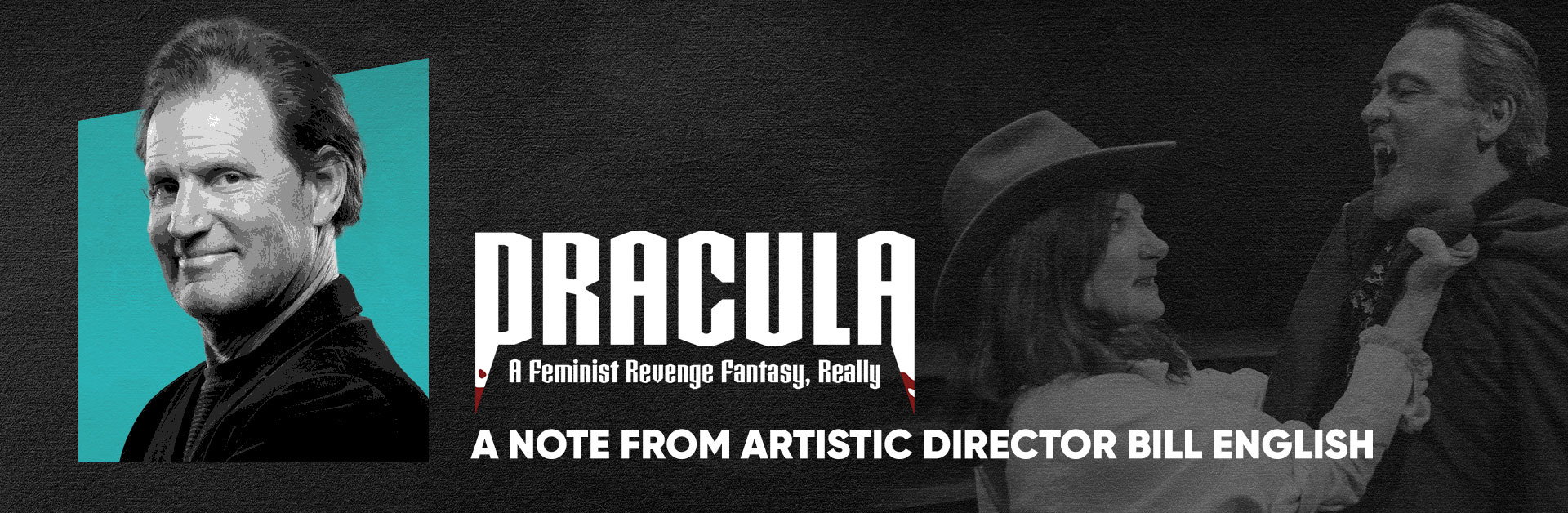
Kate Hamill’s adaptation of Dracula is not a relic of gothic horror, but a sly, muscular act of theatrical reclamation. What was once a tale orbiting a charismatic, predatory male becomes a female-driven reckoning with male power, interrogating how it is performed, how it seduces, and how it must be dismantled.
At the center of Dracula is a clear-eyed confrontation with the toxic male figure. The Count is more than a vampire. He is a system of entitlement wrapped in charm, a master of coercion who thrives on silence and complicity. Hamill refuses to romanticize him. Instead, she shifts the narrative’s gravity toward those historically framed as victims, granting them agency, wit, and a fierce collective intelligence. These women do not simply endure, they observe, adapt, and brilliantly orchestrate the monster’s demise. The horror is not only supernatural, it is societal, deeply embedded in the historical male dominance we all recognize.
It is, however, also a deliciously theatrical ride.
Hamill embraces the pleasures of melodrama with unapologetic gusto. Quick transformations and heightened “stakes” with bold physical storytelling. This is theatre that delights in its own machinery. There is humor in the horror, velocity in the storytelling, and a sense that the actors and audience are co-conspirators in the event. The play understands that spectacle and substance are not opposites, they are partners. The gasp and the laugh live side by side.
That between balance, between critique and celebration, is where the piece finds its pulse. We are invited to revel in the artifice even as we interrogate the story it carries. Capes swirl, shadows stretch, identities blur. Through it all, a deeper question emerges. What does it take to name a monster, and what does it take to end him? In a moment when conversations about power, gender, and accountability are not abstract but immediate, Dracula feels less like a period piece and more like a live wire. It reminds us that monsters persist in many forms, but so does the collective courage to face them.
So, settle in. Enjoy this Dracula – its thrill, suspense, and wit – and the delicious excess of a well-told melodrama. Relish, also, not just the staking of a vampire, but the toppling of a destructive mythology that has lingered far too long.
San Francisco Playhouse
450 Post St.
San Francisco, CA 94102
(415) 677-9596
(c) 2024 San Francisco Playhouse
A 501(c)(3) nonprofit organization. Tax ID: 86-1089699
Privacy Policy | Accessibility