

A week or so ago, a friend sent me a lyric from “Built To Last,” the title song from the Grateful Dead’s last album. And as we chatted about it, it occurred to me that the song resonated with the eternal temporary of theatre. Ours is a world of planned obsolescence. The news is perpetually reversing itself, our anxieties hop-scotch from one problem to the next as a heavy, collective exhaustion settles deep in our bones. We find ourselves yearning, pleading for something that is built to last.
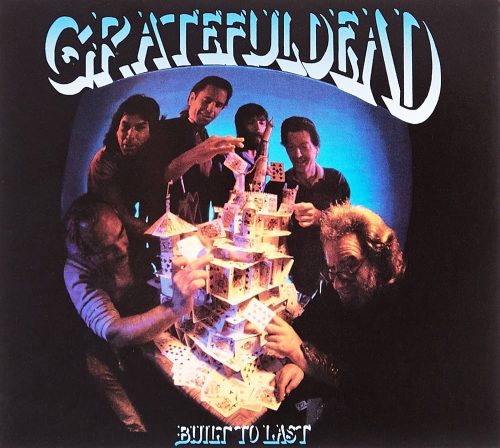
Built to Last – Studio album by the Grateful Dead
Yet we mortals know we are not built to last. So, we surround ourselves with physical structures: pyramids, an endless wall, twin towers. But no matter how structurally sound they are, our alabaster cities are inevitably reduced to rubble and archeologists find cities built on top of cities built on top of cities. The Grateful Dead were very familiar with man’s futile attempt to transcend fleeting lives with immovable edifices. The cover art for Built to Last features the band building a house of cards as if to underscore the wisdom of the title song.
In the theatre, or course, all our worlds are houses of cards. The destruction is inevitable, and generally there is a joyful party atmosphere around the “strike” as we call it, when months of back-breaking work constructing a London made of foam or a Woods made of paper mache are ruthlessly knocked down and put in the dumpster. A celebratory atmosphere prevails as a theatrical world meets its Armageddon and the stage is swept clean to become the tabula rasa for a new one. We celebrate this process in joy, as if we are rehearsing what we know will come to pass in real life.
The first line of the “Built to Last” chorus, “One blue star sets on the hill, call it back you never will,” reminds us that however we yearn to hold on to beauty or love or life, all will fade like the last star. We lose things and loved ones, chapters in our lives end, children grow up. In real life how we struggle with loss, how we grieve. Jerry Garcia gently pleads with us to let it go, accept our powerlessness, forgive, move on from the never to be captured “built to last.” In our theatre, every performance is different, every moment is never to be had again, one of the most glorious events in the theatre can be when an actor loses it and cracks up on stage. The audience goes wild. Again, are we rehearsing, celebrating the transitory in our laboratory so that we can prepare to let things go IRL? What a clever exercise we have devised to prepare us.
Our fruitless pursuit of immortality, whether it be through belief in an afterlife, the building of an estate, our name on a building, our wish to hold onto the past, a lover leaving or a child run away, all bring us suffering. The song lyrics suggest shifting the quest for “something built to last” to “something built to try.” What we love about the actors in a farce is that they never give up. We admire them because they are “built to try.” And in theatre we suggest replacing the search for guaranteed longevity with the courage to persevere. Theatre doesn’t offer answers to life’s chaos. Instead, it offers us a nightly ritual of trying to understand the human condition. By gathering together in the dark to watch our avatars refuse to give up, we are rehearsing for our own survival.
Because theatre is a live medium where actors age, breathe, sweat, and eventually exit the stage, it inherently mirrors our own mortality. Watching a story unfold from “places” to the final curtain call allows the audience to practice the art of letting go. It serves as an emotional container for the exact anxiety Hunter writes about: the knowledge that the sun will set and the stars will sink, but the story was still worth telling. While an individual performance vanishes the moment the house lights come up, the tradition of theatre has endured for thousands of years. Nations fall, languages evolve, and eras end, but the act of storytelling remains. This is the ultimate theatrical irony: the medium itself is completely fragile, yet the impulse to create it is indestructible. Ultimately, theatre sustains us precisely because it isn’t built to last. It is built to try.
– Bill English, Artistic Director
Built to Last
Song by the Grateful Dead
There are times when you can beckon
There are times when you must call
You can take a lot of reckoning
But you can’t take it all
There are times when I can help you out
And times when you must fall
There are times when you must live in doubt
And I can’t help at all
Three blue stars rise on the hill
Sing no more now just be still
All these trials soon be past
Look for something built to last
A wind held by the collar
Yes, a cloud held by the breeze
You can walk on coals of fire
But sometimes you must freeze
There are times when you offend me
And I do the same to you
If we can’t or won’t forget it
I guess we could be through
One blue star sets on the hill
Call it back, you never will
One more star sinks in the past
Show me something built to last
Built to last ’til time itself falls tumbling from the wall
Built to last ’til sunshine fails and darkness moves on all
Built to last while years roll past like cloudscapes in the sky
Show me something built to last or something built to try
There are times when you get hit upon
Try hard but you cannot give
Other times you’d gladly part
With what you need to live
Don’t waste your breath to save your face
When you have done your best
And even more is asked of you
Fate will decide the rest
All the stars are gone but one
Morning breaks, here comes the sun
Cross the sky now sinking fast
Show me something built to last
Three blue stars rise on the hill
Sing no more now just be still
All these trials soon be past
Look for something built to last
One blue star sets on the hill
Call it back, you never will
One more star sinks in the past
Show me something built to last
All the stars are gone but one
Morning breaks, here comes the sun
Cross the sky now sinking fast
Show me something built to last
Lyrics by Robert Hunter