

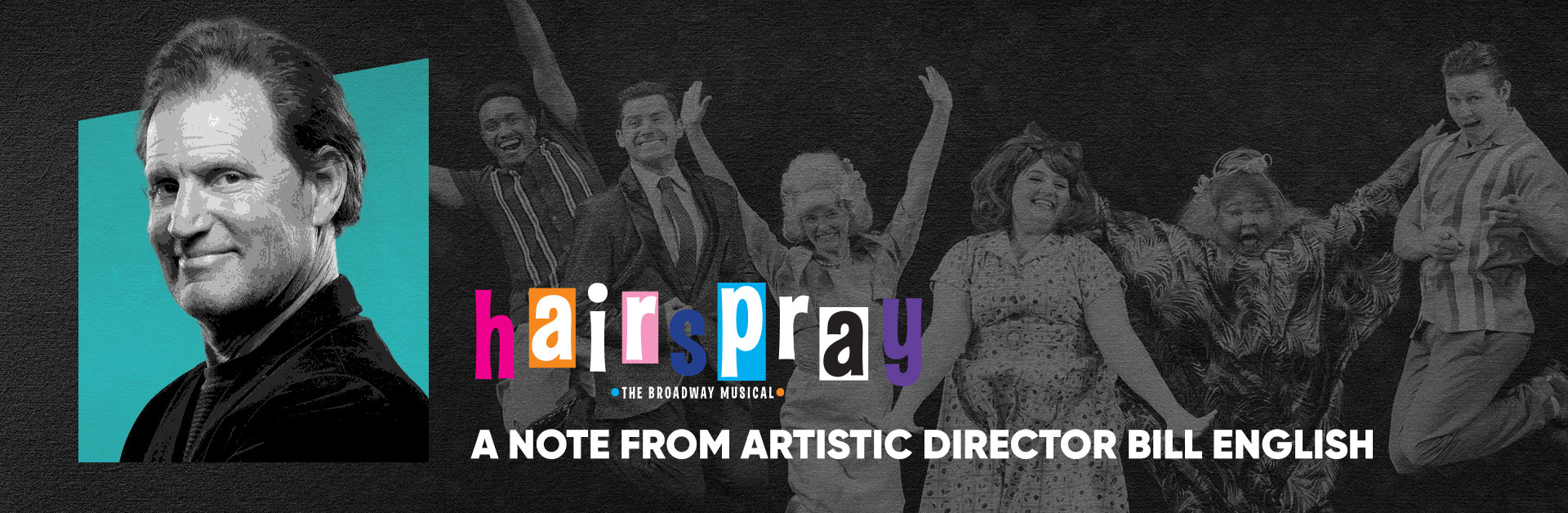
When Hairspray burst onto movie screens in 1988, John Waters hid a razor-sharp social critique inside a gloriously outrageous comedy. Beneath the bouffants, dance crazes, and irreverent humor was a subversive challenge to the forces of exclusion, racism, body shaming, and the policing of anyone who dared to be different.
The Broadway musical adaptation amplified the joy. It gave us soaring melodies, exuberant choreography, and a spirit of optimism that has made it one of the most beloved musicals of the last quarter century. Yet in revisiting the piece today, we felt compelled to reconnect with the edge that made Waters’ original film so revolutionary.
We are living through a moment when intolerance once again feels emboldened. Across our country, people are being told they do not belong. Books are removed from shelves. Histories are erased. Communities are marginalized. Differences are mocked rather than celebrated. Public discourse too often relies on shaming and scapegoating instead of curiosity and compassion. Against that backdrop, Hairspray feels startlingly urgent.
Tracy Turnblad’s story is not merely about following a dream or dancing on television. It is about refusing to accept a world that ranks human worth according to race, appearance, popularity, or conformity. Tracy’s greatest trait is not her good nature; it is her insistence that everyone deserves to be seen.
At San Francisco Playhouse, we describe ourselves as an empathy gym: a place where we gather to increase our capacity to understand lives different from our own. Hairspray is one of the great empathy workouts in musical theatre. It reminds us that progress has always depended on ordinary people finding the courage to challenge systems that exclude.
As you watch the performance, I invite you to embrace both sides of this remarkable work. Enjoy its infectious joy, its humor, and its celebration of community, but also listen for the bite beneath the laughter. Enjoy seeing ridicule aimed not at outsiders, but turned toward small-minded institutions determined to exclude. In the end, Hairspray offers something both entertaining and essential: the radical proposition that a more inclusive world is not only possible, it is a lot more fun.
San Francisco Playhouse
450 Post St.
San Francisco, CA 94102
(415) 677-9596
(c) 2024 San Francisco Playhouse
A 501(c)(3) nonprofit organization. Tax ID: 86-1089699
Privacy Policy | Accessibility